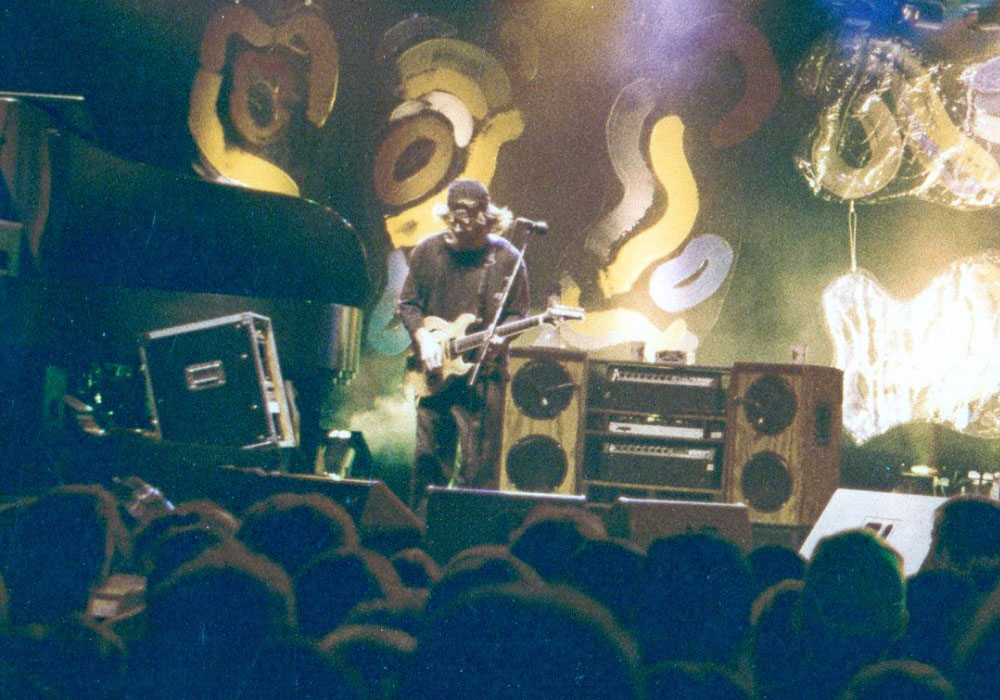
Amplification
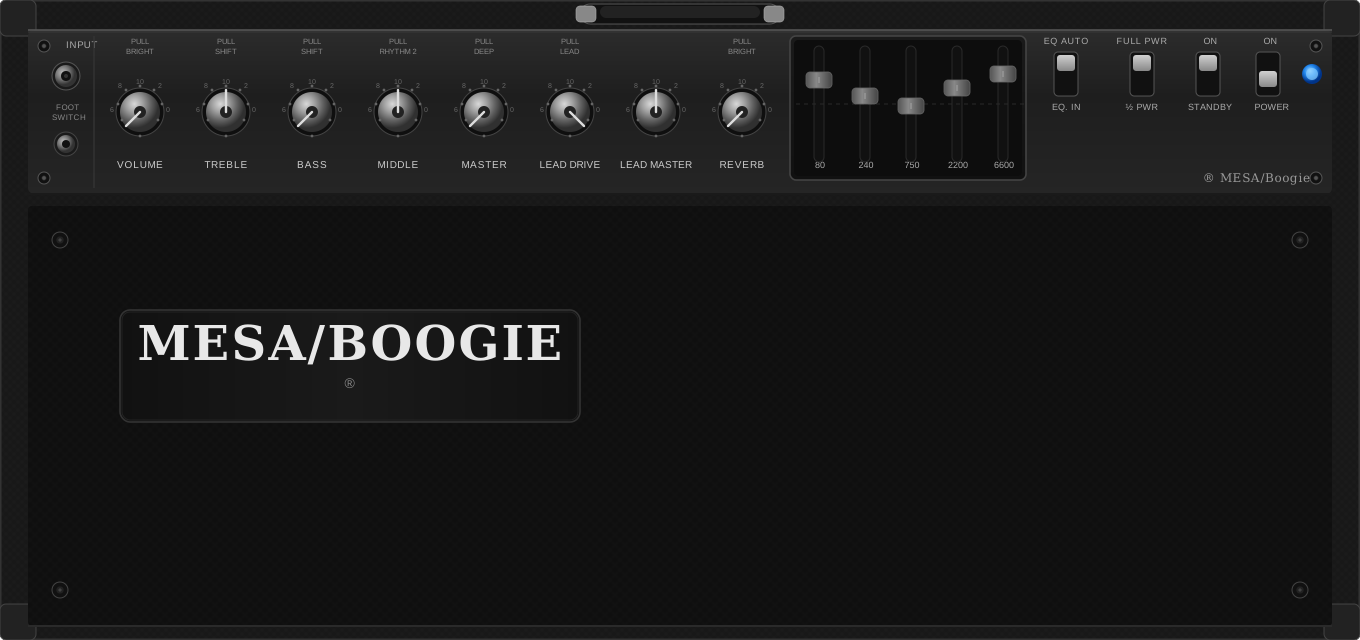
Guitar
Acoustic Guitar — Extensive Use Throughout 1994
- Pattern established Trey continued and expanded his 1993 habit of picking up an acoustic mid-show. In 1994 this became even more systematic — many shows included short acoustic clusters of 2–4 songs, most commonly drawn from Ginseng Sullivan, Dog Faced Boy, Nellie Kane, My Sweet One, Sweet Adeline, and The Old Home Place. These were typically performed without amplification or with minimal miking.
- Sep 11, 1994 Iron Horse Music Hall, Northampton, MA — Trey performed a solo acoustic set including the debut of Guyute. The first public performance of the song was on acoustic guitar at a solo show.
- Oct 10, 1994 Palace Theatre, Albany — The Old Home Place through Nellie Kane and Foreplay/Long Time were all performed acoustic.
- Oct 14, 1994 McAlister Auditorium, Tulane — Nellie Kane, Beaumont Rag, and Foreplay/Long Time performed acoustic.
- Oct 21, 1994 Sunrise Musical Theatre, FL — Foreplay/Long Time performed acoustic.
- Nov 18, 1994 MSU Auditorium — Little Tiny Butter Biscuits, The Old Home Place, and My Long Journey Home performed acoustic.
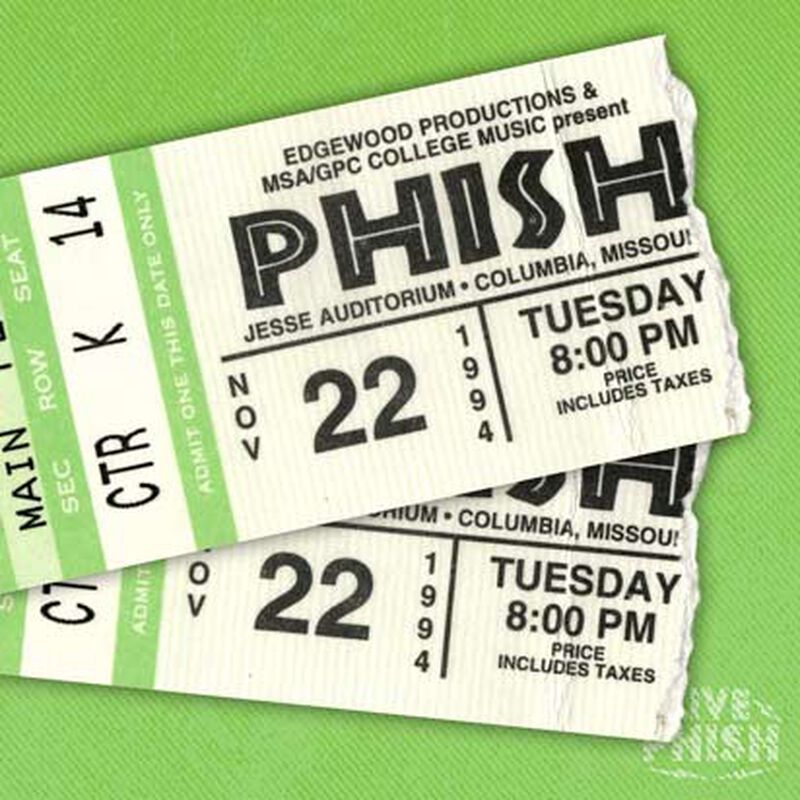
- Nov 22, 1994 Jesse Auditorium, Missouri — Big Black Furry Creature from Mars was started electric and finished in the acoustic setting. BBFCFM partially acoustic is among the more unusual documented moments.
- May 25, 1994 Warfield Theatre — My Sweet One was performed acoustic, along with other songs including Foreplay/Long Time.
- Apr 8, 1994 Recreation Hall, Penn State — The beginning of The Horse featured Trey on acoustic guitar, continuing the 1993 pattern into the Spring 1994 tour.
MIDI Switching System & Two Racks
April 1994 marked the debut of a Bradshaw rack-based MIDI switching system — the single largest change Trey's rig would ever see. The system allowed effects to be switched in and out of the signal path cleanly, with no noise or tone degradation. Crucially, it enabled Trey to bring back gear from his teenage years that had previously been too noisy or complex to integrate into a live rig.
The result was two distinct rack systems positioned behind Trey on stage — Rack A to his lower right for effects, and Rack B housing his amplifiers and reverb units.
Trey used the RS-10 purely as a stompbox — no presets, no program changes mid-show. To prevent accidentally hitting the unit's program or edit buttons during a performance, two small wooden blocks were velcroed directly onto the RS-10 to physically cover and protect those buttons. The velcro mounting made them easy to pull off whenever programming changes needed to be made, then re-attached before the next show.
New Effects — 1994
Floor Pedalboard
- MIDI Controller Custom Audio Electronics RS-10 — the primary interface for controlling all effect loops across the three CAE audio controller units in the racks. This was now the main "pedalboard" in terms of switching.
- Volume Ernie Ball volume pedal — carried over from previous era, still handling swells and overall level control.
- Wah Dunlop Crybaby — debuted April 1994. Exact floor layout unknown but almost certainly positioned alongside the RS-10 and volume pedal.
- Whammy II DigiTech Whammy II pitch shifter — first known appearance 10/7/94, Stabler Arena, Lehigh University, Bethlehem, PA. Audible during the Maze intro that night.
- Channel Switching Mesa Boogie channel switching now handled via the CAE/Bradshaw system rather than dedicated floor switcher pedals as in the previous era.
Signal Chain Overview
Simplified signal flow
MarMar
Wah
TS-10
Comp.
Stone
Volume
Mark III
×3
2×12 ×2
CAE RS-10 MIDI controller on floor controls all loop switching across CAE units in both racks. Exact delay/phaser order within Rack A not fully confirmed.
⚠ DOD 680 shown with dashed border — visually confirmed in rig (Mosier bluegrass video, Nov. 1994) but no aural evidence of use found in 1994 recordings.
Era Summary
1994 represents the most transformative single year in Trey's rig history. The jump from a simple pedalboard to a Bradshaw MIDI rack system didn't change his core tone — the Mark III and the MarMar guitar remained the heart of his sound — but it dramatically expanded what was possible in real time.
The Bradshaw system solved a problem Trey had carried since his teenage years: vintage and boutique gear is often noisy or impractical to switch manually on stage. The CAE loop controllers allowed him to bring the Small Stone, the DM2000, and the DOD 680 into the rig without any of the noise or switching artifacts that would have plagued a floor-board setup.
The three Microverbs in Rack B — each set to a different ambient texture and recallable via MIDI — replaced the single unit from the previous era and gave Trey a palette of spaces to move between without bending down mid-song.
The Digital Delay Loop jams that appear throughout 1994 — most notably on 5/7/94 — are a direct product of this new architecture. The DM2000's looping capability, now cleanly integrated and footswitch-accessible, turned delay from an effect into a compositional device.
Listen on LivePhish
Three essential 1994 documents spanning the year — the original Tweezerfest in May, a Fall Tour standout from November, and the canonical year-end release from December.
Open Research Questions
- Acoustic guitar — make/model The specific acoustic guitar used throughout 1994 for mid-show acoustic segments (Ginseng Sullivan, Dog Faced Boy, Nellie Kane, The Old Home Place, etc.) has not been confirmed. Make, model, and year of the instrument are unknown.
- DOD 680 — engagement The DOD 680 is confirmed present in Rack A via video footage, but no one has yet identified a moment in 1994 recordings where Trey audibly engages it. Whether it was ever switched in or simply sat bypassed for the entire run is an open question.
- Bradshaw system — exact debut show The Bradshaw MIDI switching system is placed as debuting in April 1994 based on available evidence, but the exact first show it was used has not been pinpointed with certainty.
- Rack A contents — full inventory The complete contents and signal routing of Rack A throughout 1994 have not been fully confirmed from available sources. Some units' exact positions in the chain are approximate.
Photos
Click any thumbnail to open fullscreen slideshow. Replace src values in the script below with real image URLs when ready.