March 1, 1997 — Portland, ME
Landmark show — one of the last with the Fall 1996 rig
3/1/97 stands as one of the final and most celebrated performances with the Fall 1996 setup intact — including the percussion kit and Motion Sound Pro 3 Leslie. The Winter tour continued into March before the rig was overhauled for the follow-up Europe tour in June.
June 13, 1997 — Europe tour debut
Re-worked rig debuts — new Goff Leslie 925 · Kriz-Kraft 17U rack · floor pedalboard
6/13/97 marked the first appearance of a significantly overhauled rig. Trey returned to a 1993-style floor pedalboard with Tube Screamers and Ross Compressor back at his feet. The Motion Sound Pro 3 was replaced by a Goff Professional-modified Leslie 925 head. The rack moved into a new Kriz-Kraft 17U case and was slimmed down to a single CAE 4×4 with four active loops.
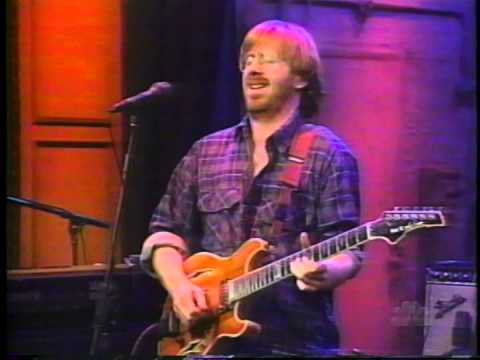
November 7, 1997 — Late Night with Conan O'Brien
Modified Fender Deluxe Reverb appears for the first time
Phish debuted "Farmhouse" on Conan O'Brien. Trey appeared with a modified Fender Deluxe Reverb combo amp — the first public appearance of what would become his primary amp for the Fall Tour.
Watch on YouTube →
November 13, 1997 — Fall tour opener
Fender Deluxe Reverb becomes primary amp
The modified Deluxe Reverb made its official live debut as Trey's primary amp at the first show of the Fall Tour. The CAE preamp and Groove Tubes power amp remained in the rack and Languedoc cabinets stayed on stage — but as backup and visual presence only. All signal ran through the Fender combo.
Unchanged all year
The Languedoc Koa #1 — debuted in late October 1996 before the Halloween Remain in Light show — was Trey's primary guitar throughout all of 1997. No guitar changes this year.
-
Feb 22, 1997
Teatro Olimpico, Rome — Talk (Phish original, from the 1996 studio album Billy Breathes) featured Trey on acoustic guitar. The only confirmed acoustic guitar appearance in the Phish.net setlist data for 1997. The European Winter tour context makes this a notable isolated instance.
-
Feb 25, 1997
Incognito, Munich, Germany — the last known performance of Fee with the Fanon MV-10S megaphone in Phish's 1.0 era. The megaphone had been a regular part of the rig since 11/19/92 and was carried on the Winter 1997 Europe tour. No confirmed megaphone appearances in Phish.net setlist data for any subsequent 1.0 shows.
Primary through Aug '97 · backup from Fall tour Carried
CAE SE 3+ & Groove Tubes Dual 75
The 1995–1996 preamp/power amp setup remained in the rack throughout 1997. From the Fall Tour onwards it functioned as a backup and stage visual — the Languedoc cabinets stayed on stage but Trey's signal ran entirely through the Fender combo.
Primary amp — from 11/13/97 New Fall '97
Modified Fender Deluxe Reverb
A heavily modified blackface Fender Deluxe Reverb combo amp that became Trey's primary amp from the Fall Tour onwards. The two channels were voiced independently, enabling Trey to footswitch between the Normal and Vibrato channels for different tonal characters mid-show. This marked the first time across all the years documented here that Trey's entire signal ran through a single combo amp — one 12" speaker doing all the work, a radical simplification from the multi-cabinet, preamp/power amp setups of 1994–1997.
Speaker Cabinets ×2 Carried
Custom Languedoc 2×12 ×2
Both Celestion Vintage 30-loaded cabinets remained on stage, connected to the Groove Tubes power amp. From the Fall Tour, they were present as backup and visual weight — signal flowed through the Fender Deluxe Reverb's internal speaker.
Conan O'Brien — 11/7/97
Phish's appearance on Late Night with Conan O'Brien to debut "Farmhouse" was the first public sighting of the modified Fender Deluxe Reverb. Six days later it became the primary amp at the Fall Tour opener on 11/13/97.
The "prop" rig
From 11/13/97 onwards, the Languedoc cabinets and the CAE/Groove Tubes rack amp were present on stage but not carrying Trey's signal. The larger rig gave the visual impression of a full guitar stack while the Fender combo did all the actual work — a deliberate choice that reflected the tonal direction Trey was pursuing.
Microphone technique
Through the Languedoc 2×12 cabinet period, each cabinet's top speaker was miked with a Sennheiser MD409. When Trey switched to the Fender Deluxe Reverb for the Fall Tour, Paul moved to a pair of AKG C414B-ULS condensers — one set about 6" from the amp, the other at 12" — panned hard left and right. As Languedoc put it: "This makes the guitar sound really wide."
Full technical specs on the Gear Deep Dive page
The complete modification list (all 16 circuit changes by Bill Carruth and Brian Brown), speaker history (Utah → Alnico Blue → Weber → Celestion V30), miking technique, and year-by-year usage are documented on the dedicated deep dive page.
Fender Deluxe Reverb — Gear Deep Dive →
Through 3/18/97 Carried from '96
Motion Sound Pro 3
Carried over from Fall 1996. Last confirmed appearance was the 3/18/97 Burlington Phish Food promotional show. Retired before the June Europe tour.
From June 1997 New June '97
Goff Professional — Modified Leslie 925
A Leslie 925 head modified by Goff Professional — Trey's third Leslie unit and the one that would define his rotating speaker sound for years. Debuted on the second Europe tour in June 1997 on top of the new Kriz-Kraft 17U rack. Like the MTI Rotophaser before it, the Leslie 925 is a passive speaker head with no built-in amplifier, requiring a dedicated power amp to drive it. Video footage from 6/22/97 in Germany gives a behind-the-rack view of the newly configured setup and appears to show a small black Fender Blues Junior amp positioned behind the rack — most likely the unit being used to drive the Leslie 925 at that time. At some point during the Fall 1997 tour or the Island Tour, Trey switched to using one of his old Mesa Boogie Mark III heads to drive the Leslie 925 instead.
Kriz-Kraft 17U rack — debut June 1997
The Goff-modified Leslie 925 sat on top of a new Kriz-Kraft-built 17U rack case that debuted at the same time. The Kriz-Kraft replaced the previous road case and became the home for Trey's consolidated rack gear going into the Summer and Fall.
Leslie 925 amplification — Fender Blues Junior (Summer 1997)
The Leslie 925 is a passive speaker head with no built-in power amplifier. Video footage from 6/22/97 in Germany — shot from behind Trey's rig during the show — gives a clear look at the newly configured setup and appears to show a small black Fender Blues Junior combo amp positioned behind the rack. This is the most likely candidate for the amp driving the Leslie 925 during the Summer 1997 Europe tour, though it has not been confirmed from additional sources.
Leslie 925 amplification — Mesa Boogie Mark III (Fall 1997 / Island Tour)
At some point during the Fall 1997 tour or the Island Tour, Trey switched from the Blues Junior to one of his old Mesa Boogie Mark III heads to drive the Goff Leslie 925. The Mesa Boogie — retired as his primary amp in 1995 — found a second life as a dedicated Leslie driver and would continue in this role going forward. The exact show at which this transition occurred has not been confirmed.
From June 1997, the rack was significantly slimmed down. The CAE 4×4 Audio Controller was reduced to a single unit with four active loops. Three Alesis Microverb units remained in the rack but only one was active — the unit set to the Reverse preset that Trey had used since the earliest days. The CAE preamp, Groove Tubes power amp, Black Cat Vibe, and Super Tremolo all carried over.
Amplification
1U
CAE SE 3+ Preamp
Preamp Backup from Fall
2U
Groove Tubes Dual 75
Power Amp Backup from Fall
Effects — 4 active loops via single CAE 4×4
1U
Ibanez DM2000
Digital Delay Carried
1U
CAE Black Cat Vibe
Univibe Carried
1U
CAE Super Tremolo
Tremolo Carried
1U
CAE 4×4 Audio Controller
Loop Switcher Now ×1 unit
Reverb — 3 units present, 1 active
1U
Alesis Microverb — "Reverse" Active
Reverb Carried
1U
Alesis Microverb — "Vast" Inactive
Reverb
1U
Alesis Microverb — "Full" Inactive
Reverb
Three Microverbs, one in use
All three Alesis Microverb units remained physically in the rack, but only the one set to the Reverse preset was plugged in and active. The Vast and Full units were present but disconnected — suggesting they were kept as potential options or simply never removed from the case.
Winter 1997 — through 3/18/97
Same as Fall 1996
- Whammy II
- CAE RS-10 MIDI Controller
- CAE Super Tremolo rate pedal
- Motion Sound Pro 3 controls
(Mute & fast/slow footswitches)
- Ernie Ball Volume pedal
- Dunlop Crybaby Wah
June 1997 — Europe tour
Back to a floor-based setup
- Ibanez TS-9 Tube Screamer(s)
- Ross Compressor
- Dunlop Crybaby Wah
- Whammy II
- Ernie Ball Volume pedal
- CAE Super Tremolo rate pedal
- Motion Sound Pro 3 / Goff Leslie control
(Mute & fast/slow footswitches)
Fall 1997 — from 11/13/97
Fender channel switching added
- Ibanez TS-9 Tube Screamer(s)
- Ross Compressor
- Dunlop Crybaby Wah
- Whammy II
- Ernie Ball Volume pedal
- Custom A/B channel switcher
(Normal ↔ Vibrato channel, Fender Deluxe)
- Dual footswitch — CAE Super Tremolo
(Chop/Normal & Mode functions)
- Goff Leslie control
(Mute & fast/slow footswitches)
June 1997 — return to the floor
The June 1997 pedalboard marked a significant philosophical shift — Tube Screamers and the Ross Compressor moved back to the floor after being racked since 1994. This "back to basics" approach on the floor mirrored the overall rig simplification of the June setup. The Ross itself remained what it always was: always on, always in the chain, set once and never touched. It was a constant across every year of 1.0 — as essential to the tone as the guitar itself.
Fall 1997 — new switching demands
The modified Fender Deluxe's two independently voiced channels required a custom A/B switching pedal on the floor — a new addition unique to this rig configuration. The CAE Super Tremolo also gained a dedicated dual footswitch for its Chop/Normal and Mode functions, which had previously been handled by the RS-10 MIDI controller.
Fall 1997 configuration · exact internal order not fully confirmed
→
→
→
→
→
→
→
→
Primary amp
Fender
Deluxe Reverb
→
FX Loop
Microverb
"Reverse"
→
Green border = rack unit · Amber border = floor pedal · Highlighted border = new in Fall 1997 · Dashed = effects loop
CAE SE 3+ and Groove Tubes Dual 75 remain in rack but carry no signal — backup and visual only from 11/13/97. Exact floor pedal order not fully confirmed.
1997 was the most eventful single year in Trey's rig history since 1994. Three distinct configurations across twelve months reflected a restless pursuit of a new sound — and the Fall Tour's modified Fender Deluxe Reverb represented the most dramatic tonal departure since the Mesa Boogie was retired in 1995.
The June overhaul told one story: simplification. The rack was slimmed to four active loops, the Tube Screamers and Ross came back to the floor, and the Motion Sound Pro 3 gave way to the more refined Goff Professional Leslie 925. The whole setup felt leaner and more direct.
Then November rewrote the rulebook entirely. The modified Fender Deluxe Reverb — extensively reworked with independently voiced channels, carbon comp resistors throughout, NOS tubes, and midrange controls on both channels — replaced the CAE/Groove Tubes system as Trey's primary amp. The rack stayed on stage but was effectively retired as a signal carrier. The sound that would define Phish's late-1990s peak had arrived.
The 3/18/97 Burlington show deserves a footnote: it was the last time the percussion kit appeared on stage with Trey's rig, quietly closing a chapter that had opened in early October 1995.
Fender Deluxe Reverb
Conan O'Brien — 11/7/97
Goff Leslie 925
Kriz-Kraft 17U rack
Floor pedalboard restored
DM2000
Black Cat Vibe
Whammy II
3/18/97 — last percussion
1997 is one of the most thoroughly documented years in the LivePhish archive. The Amsterdam box set captures the intimate Paradiso shows from both February and July. The Ventura County Fairgrounds show represents the Summer rig at peak cow-funk. The Spectrum '97 box set documents two nights at a legendary Philadelphia venue deep in the Fall tour apex — the Fender Deluxe Reverb fully broken in and firing.
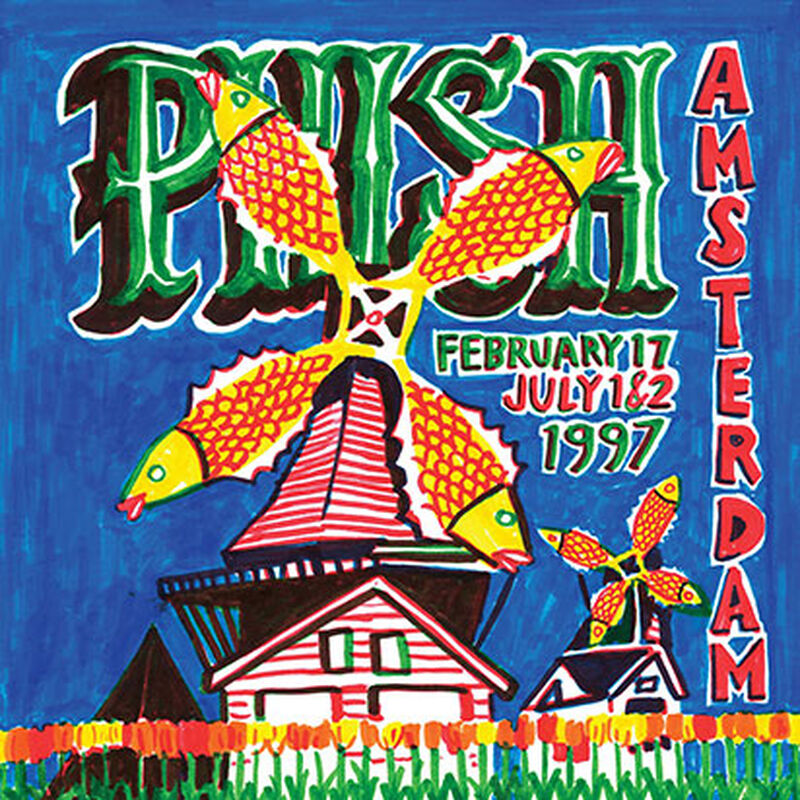
Feb 17, 1997
Amsterdam — Paradiso
Paradiso, Amsterdam, Netherlands
First of three Paradiso shows in the Amsterdam box set. The CAE/Groove Tubes rig still fully in command — the Fender Deluxe Reverb was still nine months away. Soul Shakedown Party debut opens a psychedelic Set II built around Down With Disease > Carini > Taste > Down With Disease. Part of the 8-CD Amsterdam box (JEMP1084).
Stream or download →
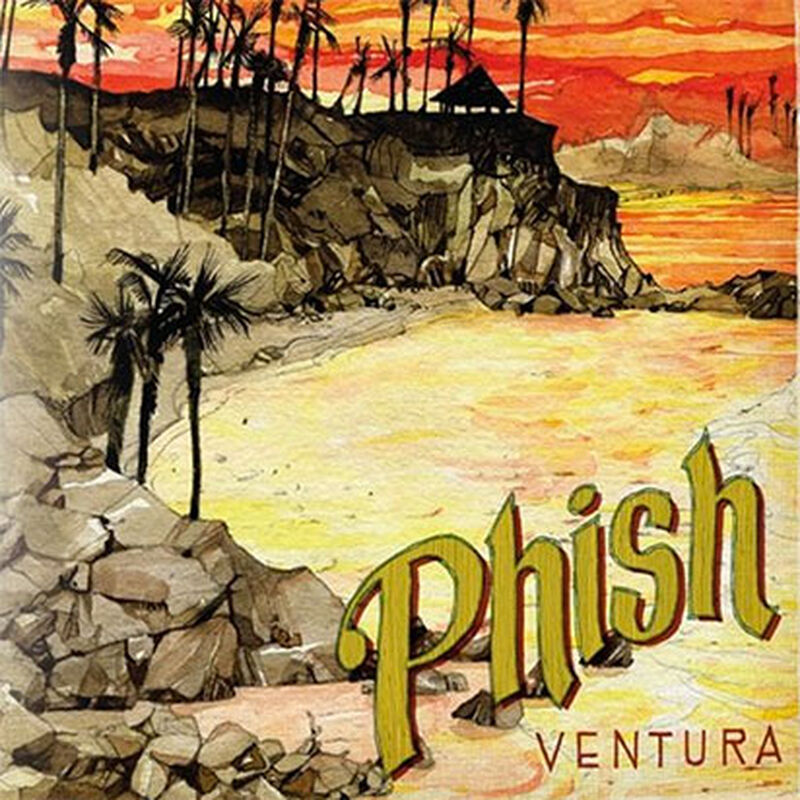
Jul 30, 1997
Ventura County Fairgrounds
Ventura County Fairgrounds, Ventura, CA
The Summer '97 cow-funk rig at full strength on the California coast. Wolfman's Brother > Chalk Dust, a deep Stash, and a massive Free > David Bowie > Cities > David Bowie dominate. Part of the Ventura '97–'98 6-CD box set.
Stream or download →
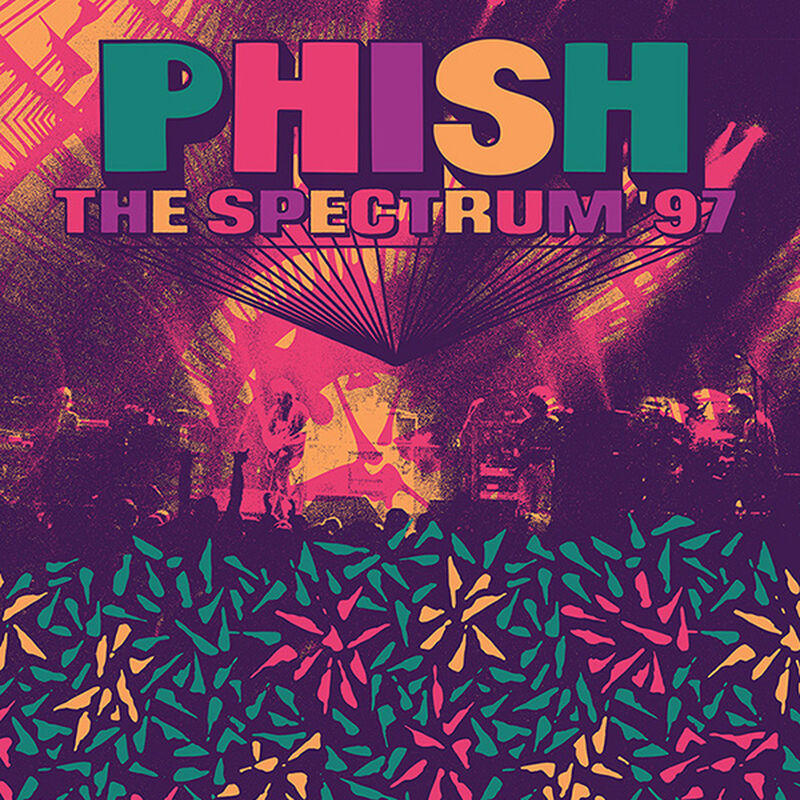
Dec 2, 1997
The Spectrum '97
The Spectrum, Philadelphia, PA
Fall tour apex at a legendary venue. Buried Alive > Down With Disease > Makisupa opens; Ghost > Divided Sky is a one-time pairing; Mike's Groove closes Set II. The Fender Deluxe Reverb three weeks into its run and fully in command. Part of the Spectrum '97 6-CD box set.
Stream or download →
Research needed
The following items represent open questions for this era — areas where documentation is incomplete or evidence is not yet confirmed.
-
Acoustic guitar — make/model
The specific acoustic guitar used for "Talk" (from Billy Breathes) at Teatro Olimpico, Rome (2/22/97) has not been confirmed. Make, model, and year of the instrument are unknown.
-
Fender Deluxe Reverb — exact modifications
The full details of the modifications made to Trey's Fender Deluxe Reverb by Bill Carruth and Brian Brown have not been completely documented. The nature and extent of all circuit changes beyond what is listed in the modifications section remain partially confirmed.
-
Languedoc cabinets — signal from 11/13/97
From 11/13/97 onwards the Languedoc cabinets and CAE/Groove Tubes rack amp were present on stage but believed to not be carrying Trey's signal. Whether they were ever switched back in during 1997, or remained purely decorative, has not been fully confirmed.
-
Motion Sound Pro 3 — miking vs. direct
Whether the Motion Sound Pro 3 Leslie was miked to front-of-house, run direct, or both during 1997 performances has not been confirmed from available sources.
-
Fender Blues Junior — Leslie 925 driver confirmation
A small black Fender Blues Junior amp is visible behind Trey's rig in video footage from 6/22/97 in Germany and is believed to have been driving the Goff Leslie 925 during the Summer 1997 Europe tour. This has not been confirmed from additional sources beyond that footage.
-
Mesa Boogie Mark III (Leslie driver) — exact transition show
Trey switched from the Fender Blues Junior to a Mesa Boogie Mark III head as the dedicated driver for the Goff Leslie 925 at some point during the Fall 1997 tour or the Island Tour. The exact show at which this transition occurred has not been confirmed.
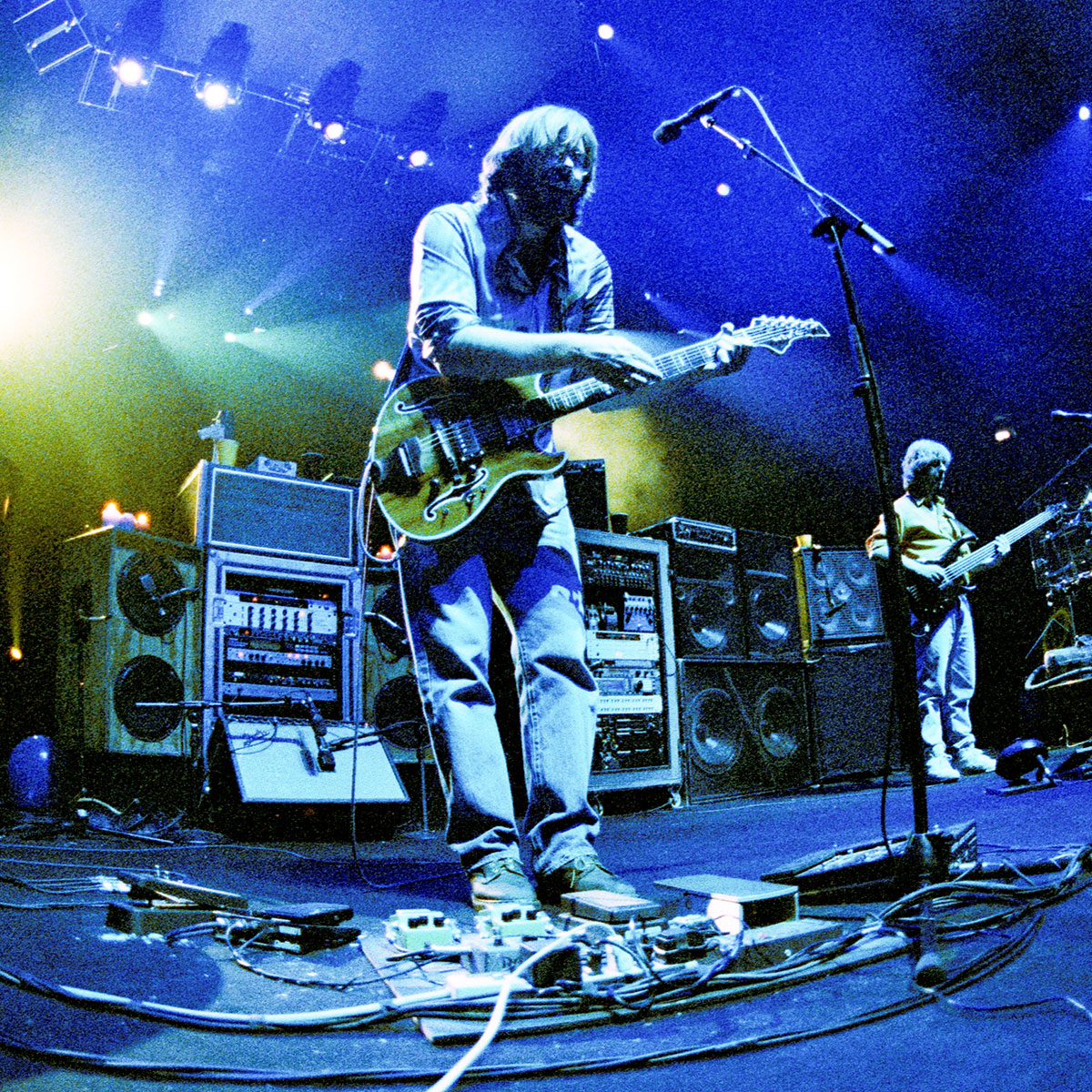
Dec 31, 1997 · MSG · Photo by Danny Clinch ↗
Trey on Conan O'Brien — 11/7/97
Modified Fender Deluxe Reverb
Goff Professional Leslie 925
Floor pedalboard — June 1997
Floor pedalboard — Fall 1997
3/18/97 Burlington — last percussion kit show
Trey live, Fall 1997 tour
Click any thumbnail to open fullscreen slideshow.